Connect Try to identify one practical outworking of what it means for you this week to be in Christ.
Warm-Up
- Do any parts of the Bible ever leave you a bit confused? How do you feel about that?
- What do you do when you don’t understand a part of God’s Word?
Read Romans 7:1-13
- How many times does Paul mention the ‘law’ in this chapter? What does he mean by it?
- What is Paul’s main point about the limits of the law? What example (from life) does he use?
- In verse 7, what question does Paul anticipate people asking, and how does he answer it?
- If death breaks the bound of the law, how does Jesus’ death change our relationship to it?
- Given everything Paul has already said about the law in chapters 1–6 (it discloses sin, cannot save, brings wrath), why might early believers have concluded the law itself was bad or "sinful"?
- What does Paul mean when he says sin "seized the opportunity" through the commandment (vv.8–11)? How is the law more like an X-ray rather than a cure?
- What's the difference between saying "the law is bad" and saying "our relationship to the law has changed"? Does this mean we have a license to do whatever we want? Why or why not?
- Where in your life have you ever treated your relationship with God more like a legalistic checklist rather than a relationship that has been secured by Christ’s sacrifice?
- According to verse 4, to whom do we now belong, and for what purpose? What does that mean for you?
- Why do you think Paul uses the image of marriage — rather than some other relationship — to describe our bond to Christ? What then is our obedience an expression of?
- What would it look like this week to obey out of love and gratitude rather than duty or fear?
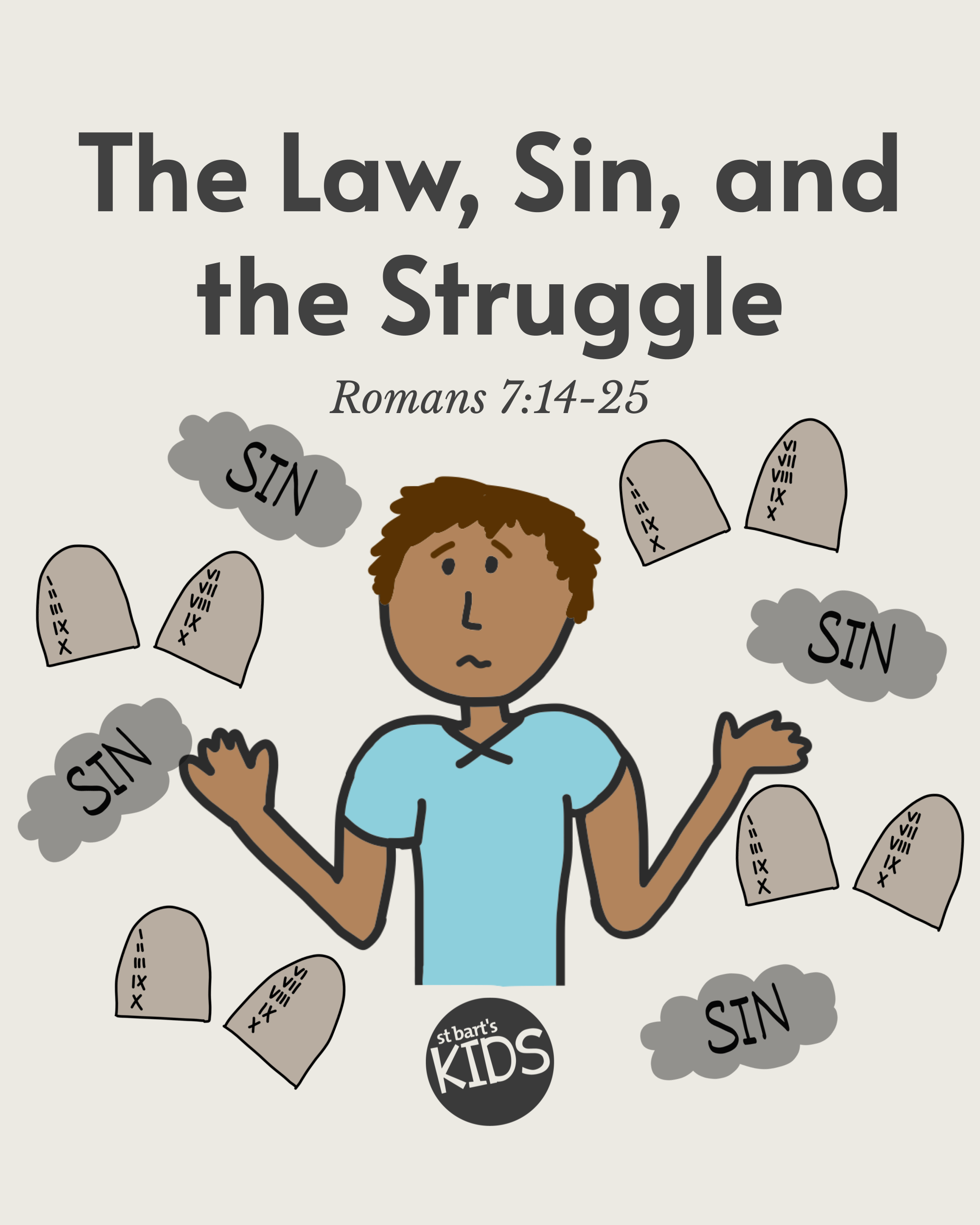
Read Romans 7:14-25
- List the struggles Paul names in these verses. What pattern keeps repeating? Do you identify with this?
- What does Paul cry out? Why is this expression of helplessness actually a good thing?
- How is crying out to God in sorrow and dependence also a good thing for us? Do you ever do it?
- Why might growing closer to God make us more aware of our sin rather than less?
- Almost as soon as Paul cries out, who does he then rejoice in? How can this security in God’s love and salvation equip us to live God’s way with a certainty of what is ahead?
Apply Where in your relationship with God are you relying on rule-keeping rather than resting in the fact that you already belong to Christ? What would it look like this week to obey out of love rather than obligation?